
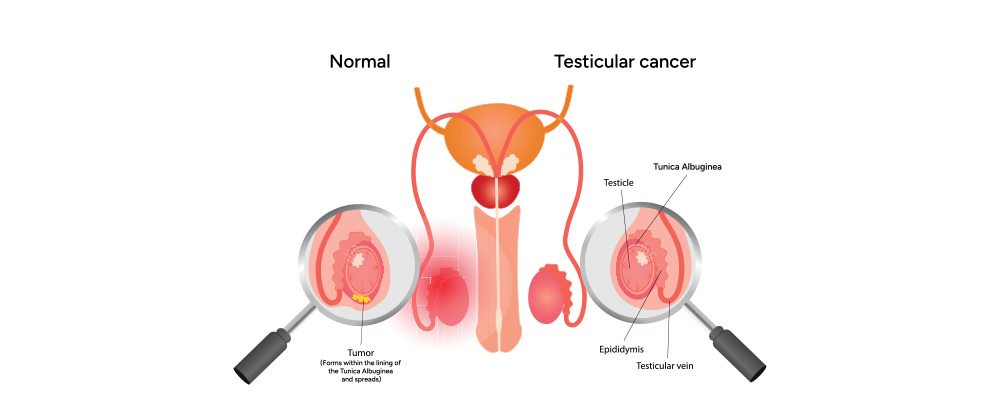
Testicular cancer is one of the most common malignancies in men aged 15 to 45 years. Etiology is multifactorial, comprising various genetic and environmental factors. The incidence of testicular cancer has been increasing over recent years, gaining increased significance due to the long impact both the disease and its treatment can have over the course of a patient's life. It is classified into two major categories: germ cell tumors (GCTs), which account for ~95% of all testicular cancers, and non-germ cell tumors (sex cord-stromal tumors such as Leydig cell and Sertoli cell tumors, which are mostly benign).
Some common risk factors include:
One of the most common symptoms include:
Its treatment usually involves surgery.Radical orchiectomy via inguinal approach is the universal first step - both diagnostic and therapeutic, and biopsy via the scrotum is strictly avoided to prevent altering lymphatic drainage and staging. Surgery is either done to remove the testicle or lymph nodes (if they are affected). The other treatment option includes chemotherapy, radiation therapy, and immunotherapy.
Upper Tract Urothelial Carcinoma (UTUC)
Upper tract urothelial carcinoma is a rare cancer that forms in the lining of the kidney or ureter and is often diagnosed at a more advanced stage than bladder cancer. Owing to this, its diagnosis is difficult and so is treating this disorder. It accounts for only ~5–10% of all urothelial cancers.
Some common risk factors include:
Many people with UTUC do not have any symptoms. They are often diagnosed when they have a urine test for another reason and the test detects blood in the urine that can only be seen under a microscope. In some cases, a person with UTUC will see blood in their urine. Less common symptoms include pain in the side. In more advanced cases, a person may notice weight loss, loss of appetite or night sweats.
If a patient has side pain or blood in their urine, they are requested to consult their physician immediately. Uro-oncology encompasses some of the most common (prostate, bladder) and some of the most biologically different (testicular, RCC) cancers in medicine. Early detection, genetic counseling for hereditary syndromes, and multidisciplinary care remain cornerstones of optimal management.