

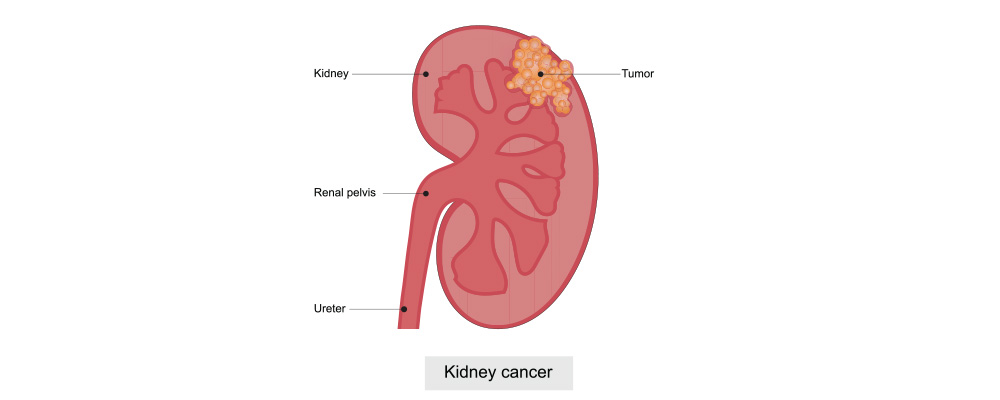
Renal cell carcinoma (RCC) is the most common malignant tumor of the kidneys and accounts for ~90% of renal malignancies. Major subtypes of kidney cancer include clear cell RCC, papillary RCC, chromophobe RCC, collecting duct, and unclassified RCC. incidence of kidney cancer is increasing, but advancements in diagnostic imaging have enabled early detection. The primary types of kidney cancer are renal cell carcinoma in adults and Wilms’ tumor in children.
Kidney cancer most commonly refers to renal cell carcinoma (RCC), a malignant neoplasm arising from the epithelial cells of the renal tubules. RCC is not a single disease but a collection of histologically and molecularly distinct subtypes. Clear cell RCC is the most common, accounting for ~75% of cases. Other uncommon kidney cancers, such as transitional cell carcinoma and renal sarcoma, also require specialized medical care for effective treatment.
Typically, carcinoma originates in one kidney, but if not addressed, it can spread to the other kidney.
Common symptoms include:
Only 10-15% of patients may present with the so-called “classic triad” of flank pain, hematuria and flank fullness. Historically over 60% of patients present with asymptomatic hematuria. Other features include fatigue, weight loss, fever, night sweats, malaise, hypertension, and anemia.
Consuming fruit- and vegetable-rich diets, and long term fatty fish consumption has been long associated with a reduced risk of kidney cancer.
A renal biopsy is used to assess the malignancy and stage of the cancer, which informs the treatment plan.
Treatment options, based on the cancer’s type and stage, may include:
The therapeutic options and management of renal cell carcinoma (RCC) are stage-dependent, and accurate staging is essential to effective management. These usually remain asymptomatic until late in the disease, and over 50% of tumors may be detected incidentally. This is a relatively common tumor; however, with early detection and effective management, survival rates are optimal.
The majority of patients first present to the primary care physician or internist, and if suspected, urologist consultation should be sought early.
At Zydus, we provide comprehensive diagnostic and treatment services for kidney cancer, delivering personalized care customized to each patient’s unique needs.