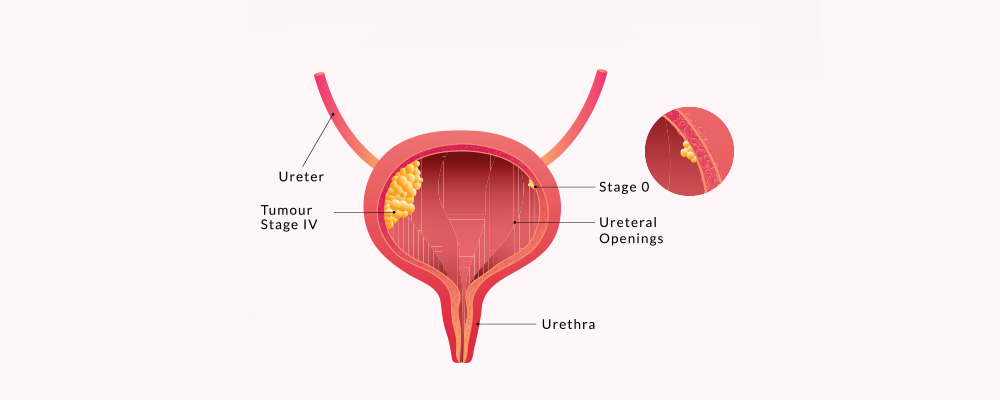
Bladder cancer is a malignant growth in the urinary bladder, the hollow muscular organ that stores urine. It begins in the urothelial layer that lines the bladder, and when diagnosed at earlier stages,
It accounts for ~90% of all bladder cancers. Bladder cancer is the 10th most commonly diagnosed cancer worldwide and the 6th most common in men. Globally, approximately 573,000 new cases are diagnosed annually.
The urothelium, the lining of the urinary tract from the renal pelvis to the urethra, is chronically exposed to carcinogens concentrated in urine. Bladder cancers are clinically divided into non-muscle-invasive bladder cancer and muscle-invasive bladder cancer.
Having one or more of these risk factors does not necessarily mean you will get bladder cancer. Many people with risk factors never develop bladder cancer, while others with no known risk factors do.
The classic triad of flank pain, gross hematuria, and a palpable abdominal mass — once the hallmark of "surgical kidney", now occurs in fewer than 10% of patients and typically indicates advanced disease. The majority of RCCs are now discovered incidentally on imaging (CT or MRI).
The hallmark symptoms include:
Surgery is the main treatment for bladder cancer, and some types of surgery to treat this type of cancer includes:
Some other treatments include radiation therapy, chemotherapy, systemic chemotherapy, immunotherapy, and targeted therapy depending on the extent of the disease and the stage of the cancer.
From transurethral resections to radical cystectomies with urinary diversion, our onco surgeons at Zydus Cancer Hospital have built on decades of uro-surgical expertise and consistently high case volumes. Our surgeons leverage robotic and minimally invasive platforms to perform complex bladder surgeries with greater precision and significantly reduced recovery times compared to open approaches. Whether the goal is tumour removal, bladder preservation, or reconstruction, our surgeons tailor every procedure to the individual patient's disease stage and life goals.
A structured multidisciplinary tumour board coordinates care across urology, oncology, and reconstructive surgery to ensure that each patient's pathway is evidence-based and comprehensive. Our rehabilitation team supports patients through post-operative recovery, while our palliative and supportive care services are available to patients and families at any point in the treatment journey.