
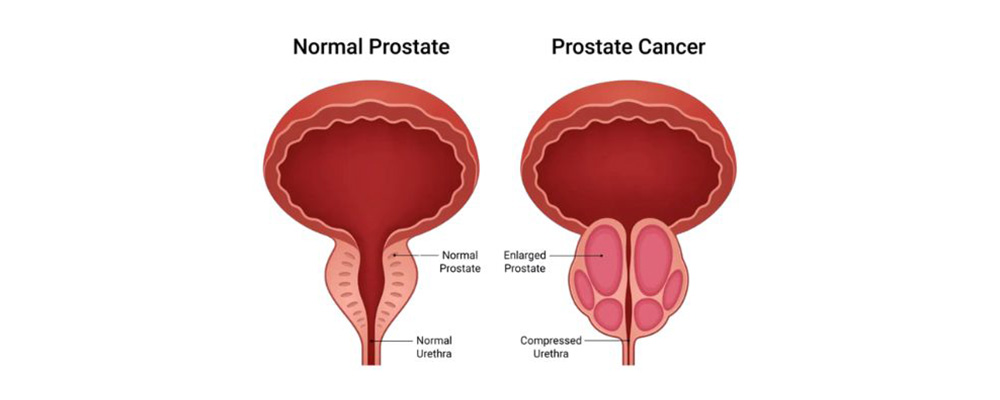
Prostate is a small, walnut-sized exocrine gland that is found near the urinary bladder. In prostate cancer, a tumor arises from epithelial cells of the prostate gland. It is the second most commonly diagnosed cancer in men worldwide, and the fifth leading cause of cancer death in men. In 2022, approximately 1.4 million new cases were diagnosed worldwide.
The overwhelming majority (>95%) are adenocarcinomas that originate from the acinar cells of the peripheral zone of the gland. Rarer subtypes include ductal adenocarcinoma, neuroendocrine (small cell) carcinoma, and transitional cell carcinoma of the prostatic urethra.
Androgens (male sex hormones - testosterone and dihydrotestosterone) control the development and maintenance of male characteristics. However, they also affect cancerous cells as they promote the growth of normal and cancerous cells by activating the androgen receptor that stimulates the expression of some genes.
Most causes of normal cells turning cancerous involve accumulation of certain types of mutations and alterations (reversible DNA/protein modifications that turn genes on or off without altering the underlying DNA. Certain gene changes (known as variants or mutations) can also be passed down from a parent and can raise the risk for prostate cancer, although these probably account for only a small percentage of prostate cancers overall.
In the early stages, tumors remain hormone (androgen)-dependent. Over time, particularly after androgen deprivation therapy, tumors may evolve into castration-resistant prostate cancer (CRPC). Metastases mostly involve regional lymph nodes and bone (osteoblastic lesions), followed by the liver and lungs.
Though there are no clear factors that may increase the risk towards developing the disease, there are a few such as
Localized prostate cancer is characteristically asymptomatic, which is why PSA screening is advised.
When symptoms do occur, they typically reflect local progression such as
Advanced or metastatic disease may present as
It is crucial to consult a specialist when the symptoms appear as there may be a chance that these might not directly mean that the patient has cancer and may be indications for other diseases.
Treatment is usually stratified by the risk group (very low, low, intermediate, high, very high, and metastatic), patient life expectancy, comorbidities, and patient preference.
Zydus Hospitals is a destination of choice for prostate cancer care, offering the full spectrum of surgical options such as robotic-assisted radical prostatectomy that prioritise both oncological outcomes and quality of life. Our uro-oncology team, trained at leading centres, and bring multiple decades of surgical experience. We believe our capabilities directly translate into precision, reduced complications, and faster recovery for our patients.
Prostate cancer care at Zydus is also guided by a dedicated multidisciplinary tumour board, integrating urology, medical oncology, radiation oncology, and radiology to create treatment plans that are rigorously personalised. Advanced imaging and diagnostics including multi-parametric MRI and targeted biopsy platforms ensure accurate staging and counselling services are available for patients with a family history or any other risk. They work in tandem with our rehabilitation and supportive care teams with patients at every step.