
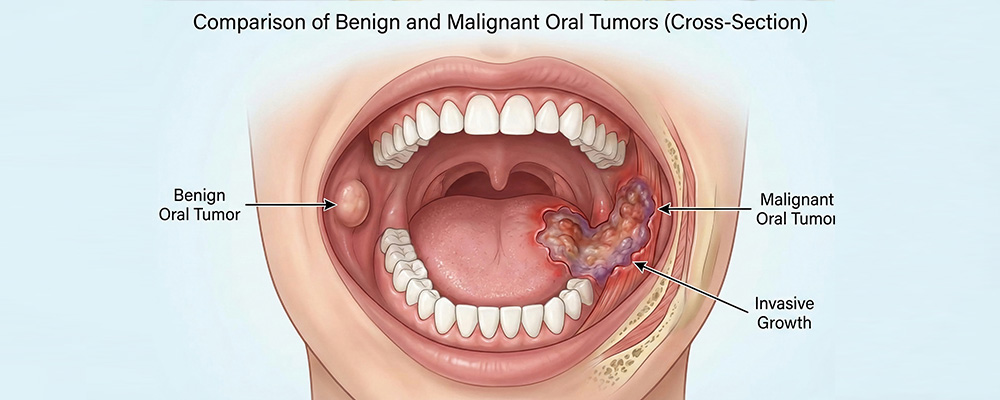
Mouth or oral cancer is a prevalent type of cancer that can affect areas such as the lips, tongue, floor or roof of the mouth, gums, and inner cheeks. These cancers rarely arise de novo and typically evolve through recognizable premalignant stages.
The exact cause of oral cancer varies but there are several risk factors that may contribute:
Oral cancer has one of the starkest stages to patient survival rate disparity as a stage I lesion caught early carries a survival rate of well over 90% but the same diagnosed at later stages (III or IV), drops to less than 15%.
Some symptoms include:
Oral cancer remains a disease where early detection is transformative. The mere difference between a Stage I diagnosis and a Stage IV diagnosis is often the difference between a simple surgery and a life-altering, morbidity-heavy treatment course. Multidisciplinary management involving oral surgeons/head and neck surgeons, radiation oncologists, medical oncologists, speech pathologists, and prosthodontists is the standard of care. The single most powerful intervention remains maintaining good oral hygiene and going for routine oral exams.
A subtype of oral cancer, tongue cancer occurs when cells in the tongue grow uncontrollably, forming ulcers or tumors that may be malignant. It can develop in any part of the tongue.
While anyone can develop tongue cancer, it’s often linked to prolonged or excessive tobacco and alcohol use. Regular dental checkups are vital, as they may help detect tongue cancer early.

Early diagnosis improves treatment success, preserves tongue appearance and function, and reduces the likelihood of recurrence.
The salivary glands, consisting of three pairs of major glands, produce saliva. Most minor salivary gland tumors start in the palate (roof of the mouth). Over half of salivary gland tumors are benign and do not spread to other tissues.
Common signs include:
Early and accurate diagnosis significantly enhances treatment outcomes and improves the patient’s quality of life.
Zydus Hospitals offers comprehensive care for oral cancers and combines expertise with the latest robotic-assisted and minimally invasive techniques to achieve successful outcomes while preserving form and function. Our oral oncology team routinely manages advanced presentations such as composite resection (commando) surgeries for cancers on the floor of the mouth, buccal mucosa, and jaw (without putting any facial cut or lip cut). They specialise in both surgical precision and a keen understanding of reconstruction and rehabilitation.
Our Multidisciplinary Tumour Board ensures that every patient with oral cancer receives the full benefit of collective expertise across surgery, oncology, dental rehabilitation, speech therapy, and physiotherapy. Genetic counselling is available for those with hereditary risk factors, and our palliative care team provides support whenever needed.